In the shimmering, volatile ecosystem of the video game industry, the live-service model has become both a promised land and a graveyard. For every Fortnite that ascends to cultural ubiquity, there are countless others that flicker and die, their servers going dark before their communities can truly take root. Steve Sinclair, CEO of Digital Extremes and the guiding force behind the enduring space-ninja saga Warframe, watches this cycle with a mix of professional curiosity and profound sorrow. From his vantage point in 2026, having shepherded his own game from a modest launch in 2013 into a thirteen-year phenomenon, he sees a fundamental flaw in the modern publisher playbook: a crippling lack of patience.
Sinclair’s perspective is not born in a vacuum. It is etched by the tombstones of ambitious projects that were abandoned at the first sign of struggle. He recalls the fate of games like Radical Heights, a third-person battle royale that dared to add BMX stunts to the shooter formula. Backed by Cliff Bleszinski of Gears of War fame, it launched into early access in April 2018. The game was like a sapling planted in a hurricane; it never had a chance to establish its roots before the winds of immediate financial expectation tore it from the ground. Active development ceased within a month, and Boss Key Productions closed its doors for good.
"They think the release is make or break, and it’s not," Sinclair stated in a recent interview, his words carrying the weight of over a decade in the live-service trenches. "They have the financial means to be persistent, and they never do it. It comes out, doesn’t work, and they throw it away." To Sinclair, this cycle is as wasteful as it is shortsighted. A game's launch, he argues, is merely the opening act—a first impression, not a final verdict. The true story of a live-service game is written in the months and years of updates, community feedback, and iterative evolution that follow.
The landscape of 2026 is littered with the ghosts of these abandoned worlds, their potential unfulfilled. Consider the high-profile casualties from just a few years prior:
| Game | Developer/Publisher | Launch Year | Notable Fate |
|---|---|---|---|
| Suicide Squad: Kill the Justice League | Rocksteady/Warner Bros. | 2024 | Reported $200M loss, player count dwindled rapidly. |
| Redfall | Arkane Austin/Bethesda | 2023 | Poor launch reception, studio closed in 2024. |
| Anthem | BioWare/EA | 2019 | Major overhaul cancelled, support ended in 2021. |
These were not small experiments; they were blockbuster investments featuring beloved IPs and talented teams. Yet, when the initial player numbers dipped or review scores were mediocre, the corporate response was often swift and terminal. Sinclair laments the human cost of this strategy. "Isn’t that a shame when you put so many years of your life into iterating on those systems or building technology or building the start of a community... and because the operating costs are high, you get terrified when you see the numbers drop and you leave," he reflected.
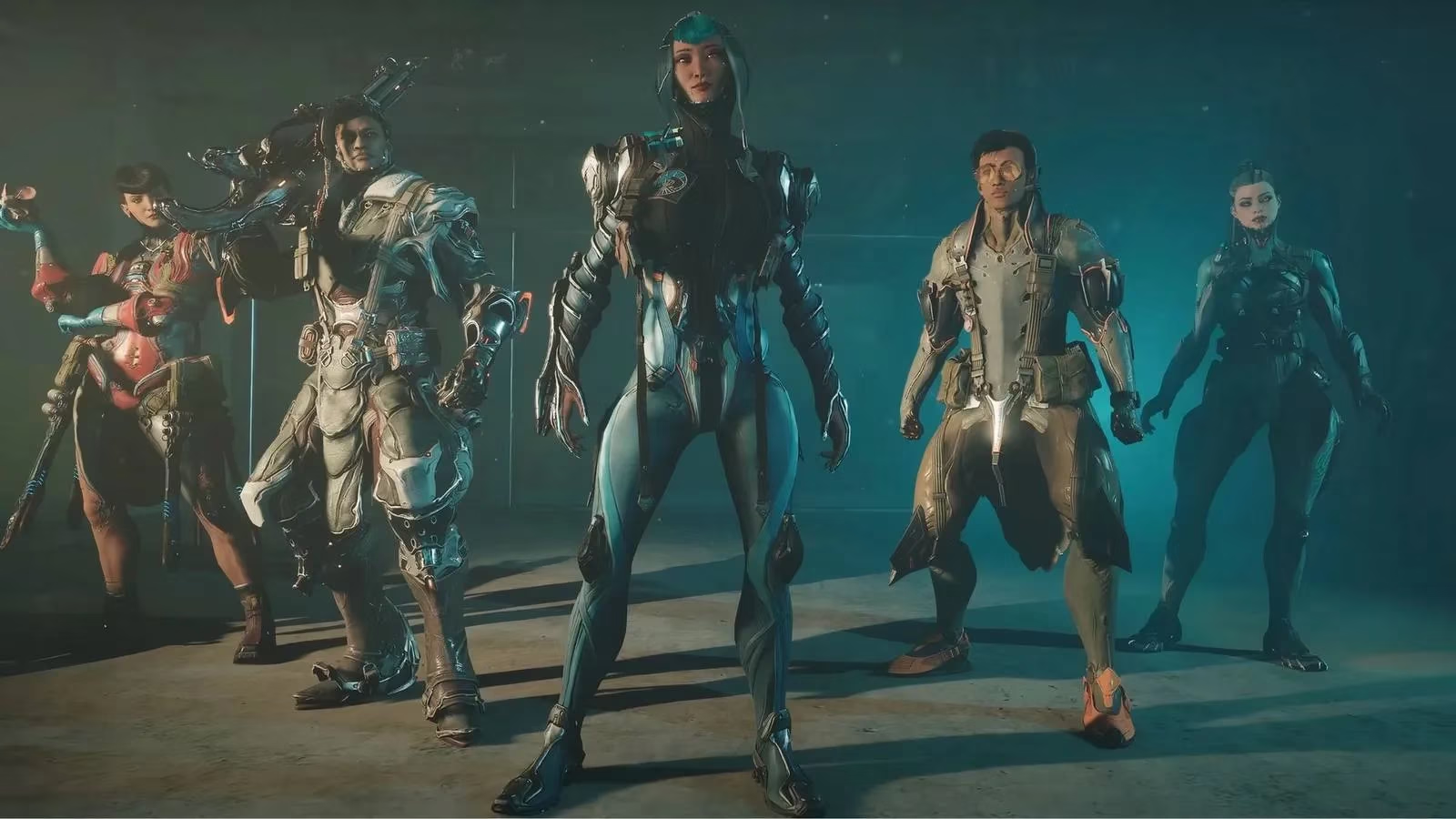
Warframe itself is a testament to a different philosophy. Its launch was far from a meteoric success. Yet, Digital Extremes treated it not as a finished product but as a living foundation. They nurtured its community, responded to feedback, and expanded its universe with the meticulous care of a gardener tending a bonsai tree, understanding that its true shape would reveal itself over years, not weeks. The game became a social ecosystem as complex and self-sustaining as a coral reef, where veteran players, new recruits, and constant content updates created a vibrant, ever-changing world.
In contrast, Sinclair sees many failed live-service games as butterflies pinned before their wings were fully dry—beautiful concepts frozen in a state of unrealized potential. Publishers, driven by quarterly reports and shareholder expectations, often lack the stomach for the marathon required. The market in 2026 is more saturated than ever, with new service games debuting almost weekly, each fighting for a slice of a finite player base. This environment makes publishers even more risk-averse, treating every launch like a high-stakes poker hand where folding at the first loss is safer than playing the long game.
However, Sinclair holds out hope that his message might resonate. He points to the rare success stories of games that recovered from rocky starts through sustained support and visionary updates. "We’ve seen this with amazing releases that I think have massive potential, and I think they eject too soon," he said. The path Warframe blazed—from a niche title to a cornerstone of the genre—proves that persistence can pay monumental dividends. It requires a shift in mindset: viewing a game as a platform for a decade-long conversation with players, not as a one-time transactional commodity.
As the industry moves forward, the question remains whether publishers will learn to cultivate patience. Will they see the value in the slow burn, in building a world that players can call home for years? Or will the graveyard of abandoned live-service games continue to grow, each tombstone a reminder of a universe that was shut down before its story had even truly begun? For Steve Sinclair and the veterans of Warframe, the answer is clear: true legacy is not forged in a day-one explosion, but in the quiet, persistent commitment to build something that lasts.