As of 2026, Warframe is still one of the best examples of a live-service game that can run on a toaster and still look like a million bucks on a PS5 Pro. Back when the PS5 first launched, Digital Extremes COO Sheldon Carter sat down with TheGamer to talk about what next-gen hardware meant for the space ninja simulator. His answers about load times, rendering, DualSense feedback, and community collaboration still hold up like a well-built Warframe build. 🚀
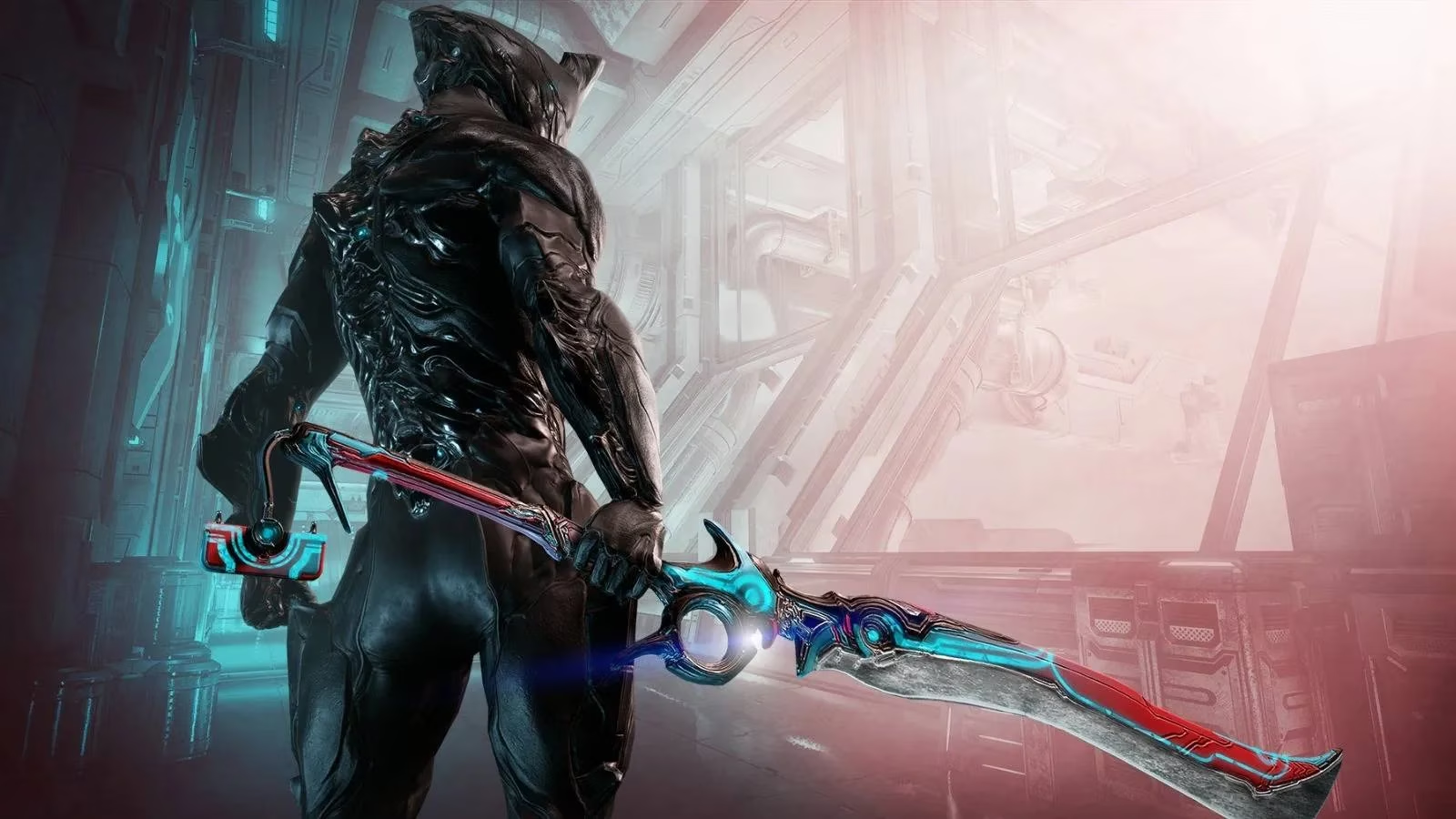
Load Times: From Coffee Break to Mock Speed
Carter was most excited about load times. He called the PS5's speed 'mock speed' because it felt almost unreal. On PS4, jumping into a mission could take up to 45 seconds. On PS5, that same load dropped to around five or ten seconds. That is roughly 35 seconds saved every single time. For a game built around fast movement and fluid transitions, that is not a small quality-of-life tweak. It is a game-changer. 🌀
Players no longer have to sit around twiddling their thumbs. They can go from the inner Necralisk out into the Deimos landscape almost instantly. That seamless flow makes the world feel more immersive. As Carter put it, on older consoles it is still a great experience, but players do not feel like they are part of the world in the same way. On PS5, the barrier between menu and mission basically evaporates.
Rendering, 4K, and 60FPS: Buttery Smooth When It Counts
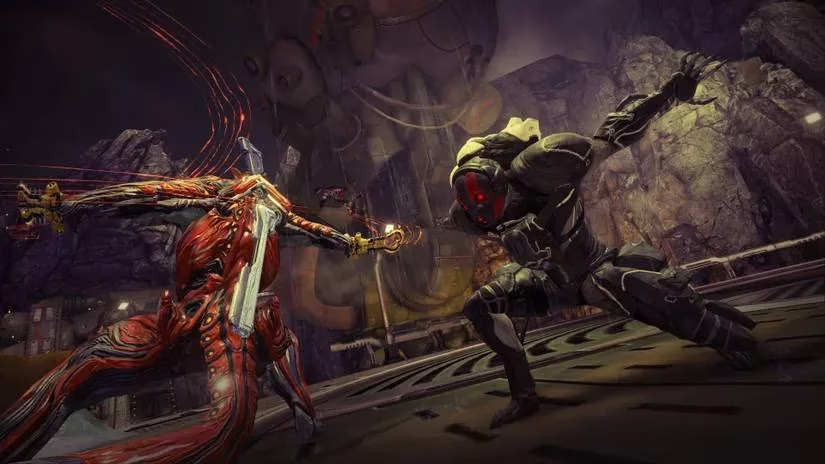
Digital Extremes did not just flip a switch. The studio revved up its entire rendering engine, the Evolution Engine, to prepare for the generational change. Dynamic lighting, character shadows, muzzle flashes, and weapon trails all got a fresh coat of paint. According to Carter, places like the Plains of Eidolon show off the new lighting best, especially when god rays stream through the trees and foliage. 🌳
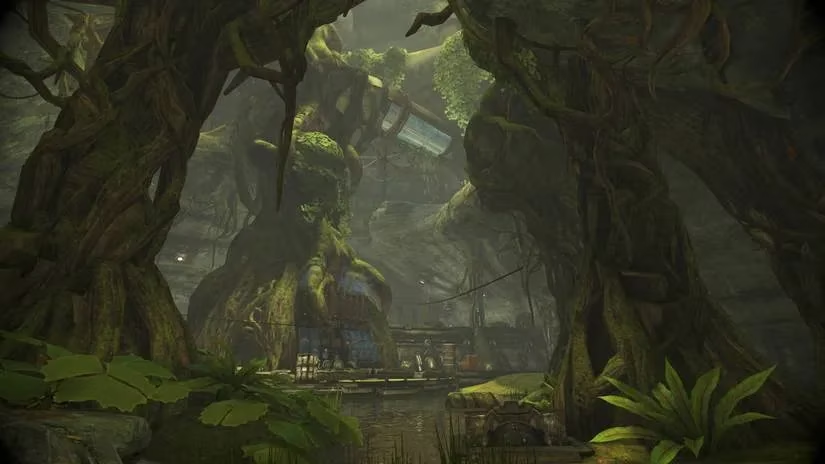
In terms of performance, Warframe on PS5 targets native 4K and 60fps as often as possible. Carter admitted the game uses adaptive resolution and frame rate because four players popping clones and firing a hundred different effects can push any machine. But when the action calms down, the game looks sharp and runs smooth. That balance matters more than chasing a locked number that would break during chaotic moments.
| Feature | PS4-era experience | PS5/next-gen experience |
|---|---|---|
| Load times | Up to 45 seconds | Around 5-10 seconds; ~35 seconds saved |
| Resolution | Often 1080p | Native 4K, adaptive |
| Frame rate | 30fps common | 60fps as often as possible |
| Controller | Basic rumble | Haptics and adaptive triggers |
| Immersion | Menu-heavy transitions | Near-seamless open-world entry |
DualSense: 300+ Weapons and a Lot of Drooling
The DualSense controller was a big deal for Carter. He joked that he was desperately trying to get his own PS5 at the time, but the team already had test kits. With over 300 weapons in Warframe, tuning haptic feedback and adaptive triggers is a massive job. One of the lead designers, Joe Buck, was practically drooling over the possibilities. The goal was to make each weapon feel distinct, not just add a generic buzz. 🎮
That attention to feel is classic Warframe. The game has always been about movement, melee stances, and the tiny details that make combat satisfying. Adaptive triggers could make a bow draw feel tense, a heavy blade feel weighty, or a rapid-fire rifle feel snappy. Carter said that when the team gets it right, it feels so good. By 2026, that philosophy has only expanded with more platforms and more controller options.
Crossplay, Cross-Progression, and the PC Question
Carter also talked about crossplay and cross-progression as major next-gen advantages. Warframe started on PC, and for years PC players got updates first. Consoles had certification processes, so Digital Extremes would ship the PC version immediately, send the console build to cert, and use PC players as a test batch. That meant different platforms sometimes lived in different timelines. ⏳
The studio's goal was to close that gap. Heart of Deimos was a simultaneous release, a test run for a more unified future. Carter admitted that Digital Extremes has a hard time holding onto content because the team wants to ship things as quickly as possible. But as the game matured, the team got better at predicting problems before they hit cert. The dream was simple: everyone plays the same content at the same time. By 2026, cross-save and cross-platform play have made that dream far more real, even if perfect parity remains a moving target.
For PC players, the next-gen upgrades were not left behind. The new rendering features could be toggled on or off. If someone had a high-power PC, they could turn on all the bells and whistles. If someone was playing on an older rig, they could keep the game running smoothly. Carter was clear that Warframe is people's hobby, and the team did not want to leave anyone behind just because the console generation moved forward.
Bullet Jump: The Bug That Became a Signature Move
One of the coolest stories from the interview is how bullet jumping was born from a bug called coptering. Early Warframe players figured out that certain melee attacks could launch them across levels at ridiculous speed. It was an exploit, but players loved it. Instead of just patching it out, Digital Extremes asked a better question: how can we turn this into a real feature? 💥
The result was bullet jumping, a move that is now inseparable from Warframe's identity. It gave players more mobility, more verticality, and more freedom. The level design team then started building around it, creating spaces that rewarded that kind of movement. Carter described it as a collaborative process with the community. When Warframe is at its best, it feels like Digital Extremes and the players are co-developing the game together.
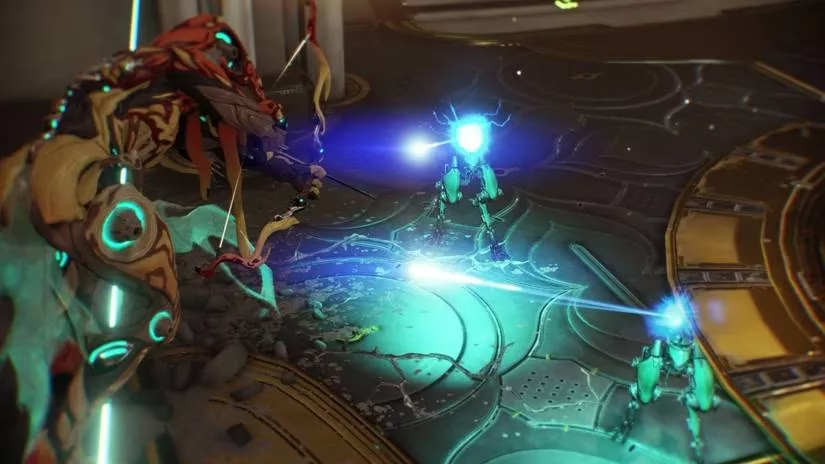
That relationship showed up again with Xaku, a Warframe co-created with the community. Carter called it a huge success and said the team would continue doing similar collaborations. The community management team is embedded with the dev team, so ideas flow constantly. It is not just marketing fluff. It is part of the development loop.
Design Backflips and Secret Factions
Carter used the phrase 'design backflips' to describe one of Warframe's biggest challenges: releasing new content that respects years of story while still letting new players jump in. Some story reveals have gameplay implications. If a player has not reached that point, certain content has to be gated or hidden. That is why Plains of Eidolon has a secret faction. By making it secret and building lore around that secrecy, the team could include mid-game content without spoiling new players. 🤸
Archwings had a similar issue. They were introduced in open worlds, but players had to finish missions elsewhere to use them. To avoid locking out newer players, Digital Extremes added other flying machines that anyone could use. It is a clever workaround, and it shows how constraints can lead to creative design. As Carter said, design is best when it has some constraints. The trick is balancing that with the desire to let as many people as possible enjoy the new stuff.
Necramechs, Liches, and the Future of Warframe
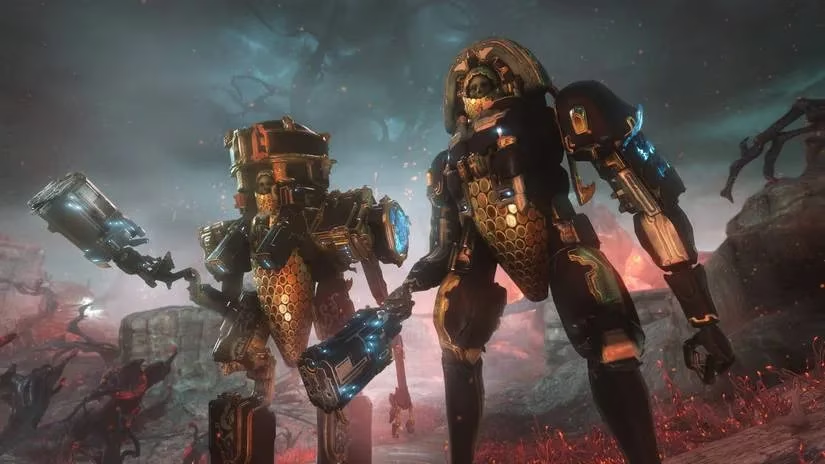
At the time of the interview, Carter was hyped about Necramechs. He loves mechs in general, and the team had big plans for the system. The Bone Widow and the original Necramech were just the beginning. He hinted that Necramechs would become more integrated into the future of the game, with more places to try them and more depth to explore. The Lich system was also expanding, with a Corpus version on the way that would add new lore and a fresh way to understand the Corpus faction. 🤖
Carter promised that 2021 would be a big content year, with reveals beyond TennoCon. In 2026, it is safe to say that promise aged well. Warframe has continued to evolve with new quests, new systems, and new ways to play. The specifics have changed, but the philosophy has not: keep the game fluid, keep the community involved, and keep pushing the hardware without forgetting the players on older machines.
The Bottom Line
Warframe on PS5 is not just a prettier version of the same game. It is a faster, smoother, more immersive version that respects players' time. Load times are slashed. The rendering engine shines. The DualSense adds a new layer of feel. Crossplay and cross-progression bring the community closer together. And the bullet jump story proves that Digital Extremes listens to its players, even when they are breaking the game in half. 🥷
In 2026, that mix of speed, style, and community trust is still rare. Warframe may be over a decade old, but it keeps finding new ways to feel next-gen. As Carter might say, when you get it right, it feels so good. And for players, that is no small potatoes.